

AI / AI Architecture & Enablement
Give AI useful work and clear limits.
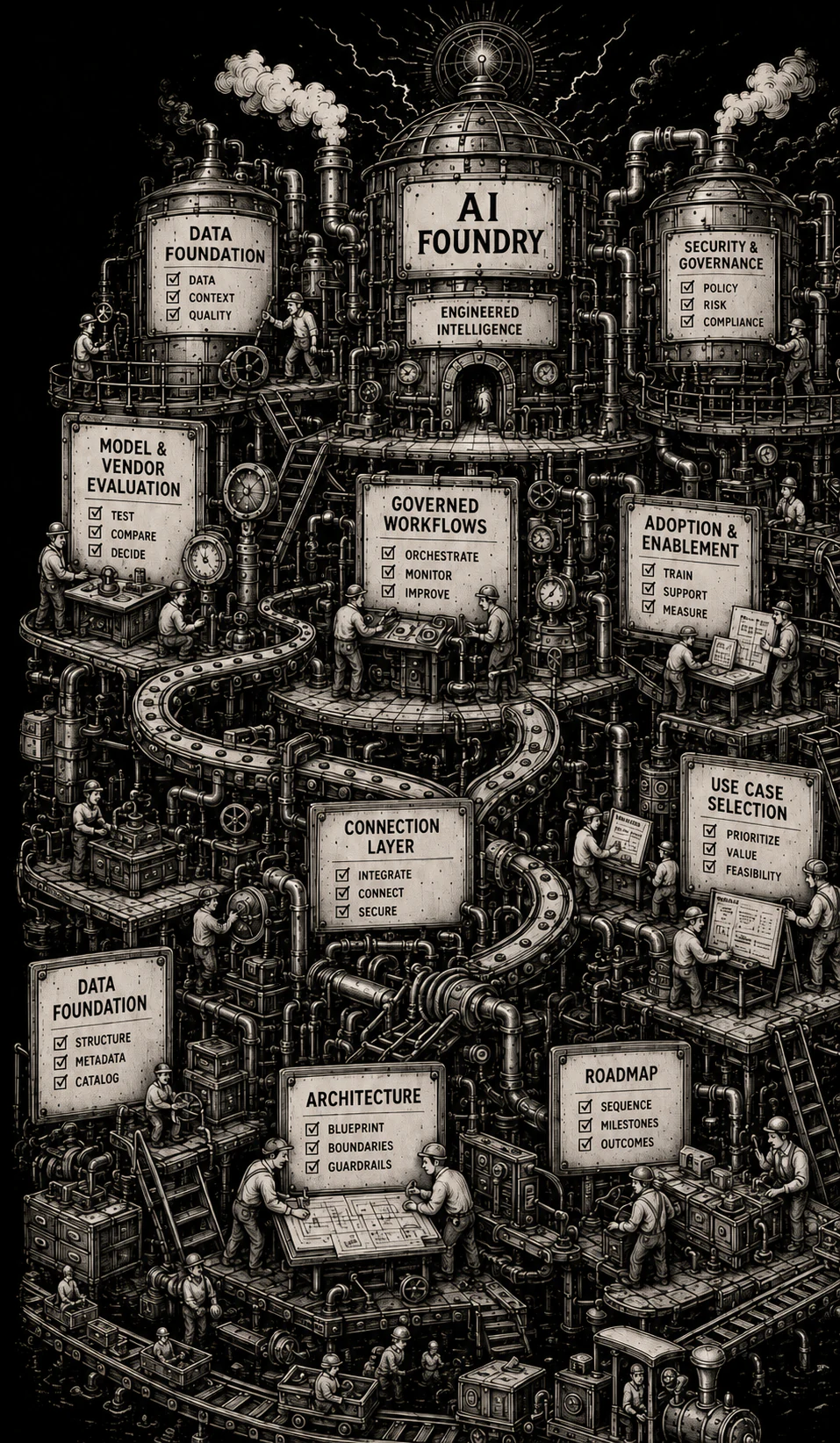
We find the right job. We plan the right connections. We define when a person must review or take over.
- 01
Find the job before choosing the AI.
We find work AI may handle well.
Then we identify the information and system connections the job requires.
We set permissions, safety rules, and points where a person must review or take over.
That keeps the project tied to a real business problem.
- 02
Know what is ready before you build.
We examine your data, documents, systems, and how work moves today. We also consider the people who will use the system.
We compare likely value with effort and risk. Then we show what can begin now, what must be fixed first, and what is not worth pursuing.
- 03
Design the path from a first test to daily use.
We choose the jobs where AI offers clear value and has a realistic path to daily use.
We compare AI systems and vendors against the work they must perform. We also keep the design portable where it matters, so changing the underlying AI does not require rebuilding the entire process.
Then we design how the system will run and what it may access. We set security boundaries, decide who controls the system, and mark where a person must review the work.
Before the AI receives real authority, we test it in an isolated environment. We use ordinary work, unusual cases, bad inputs, permission limits, and deliberate attempts to make it fail.
We also plan how to introduce the system and help people use it. A system does not become useful merely because someone bought it.
- 04
Leave with a plan people can follow.
You receive a prioritized list of jobs AI may handle and a map of how it will connect to your systems.
You also receive rules for security and control, plus a plan for introducing the system to your team.
The plan defines how results will be checked after launch, how usage and cost are limited, who can pause the system, and how to return to the last safe version if something goes wrong.
The roadmap shows what to build first, what each step depends on, and what your team can realistically support.
- 05
Know what AI should do and where it should stop.
You know which work AI should support and what information it may use.
You know who remains responsible and how to move from testing to daily use.
Important actions require the right approval. Performance is checked over time, because a system that worked during testing can still drift as the work, information, or technology changes.
The result is AI aimed at useful work, kept within clear limits, and built for the business you actually have.