
Put AI to work inside your business.
Useful work.
Connected systems.
People remain responsible.
AI often begins as a separate tool. One person opens a chat, finishes a task, and closes it. The tool may help that person, but the rest of the business keeps moving as before.
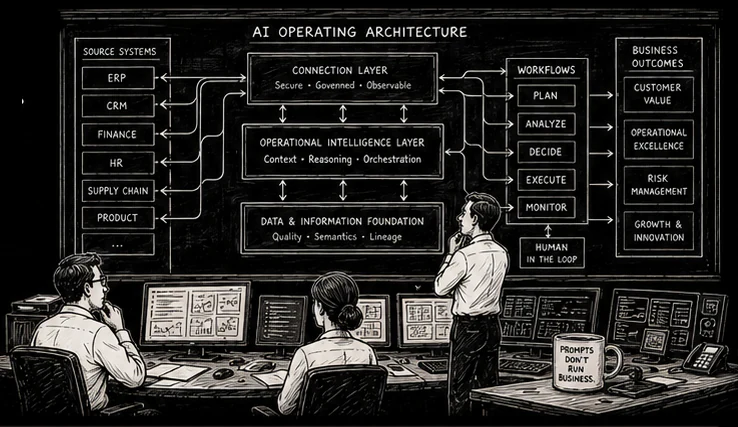
For AI to improve work across the company, it must connect to the data, documents, tools, and workflows people already use.
We design those connections with permissions, safety rules, and clear points where a person must review or decide.
The result is AI that can help with real work without being given more access or authority than it needs.
Use AI where it helps. Keep people where judgment matters.
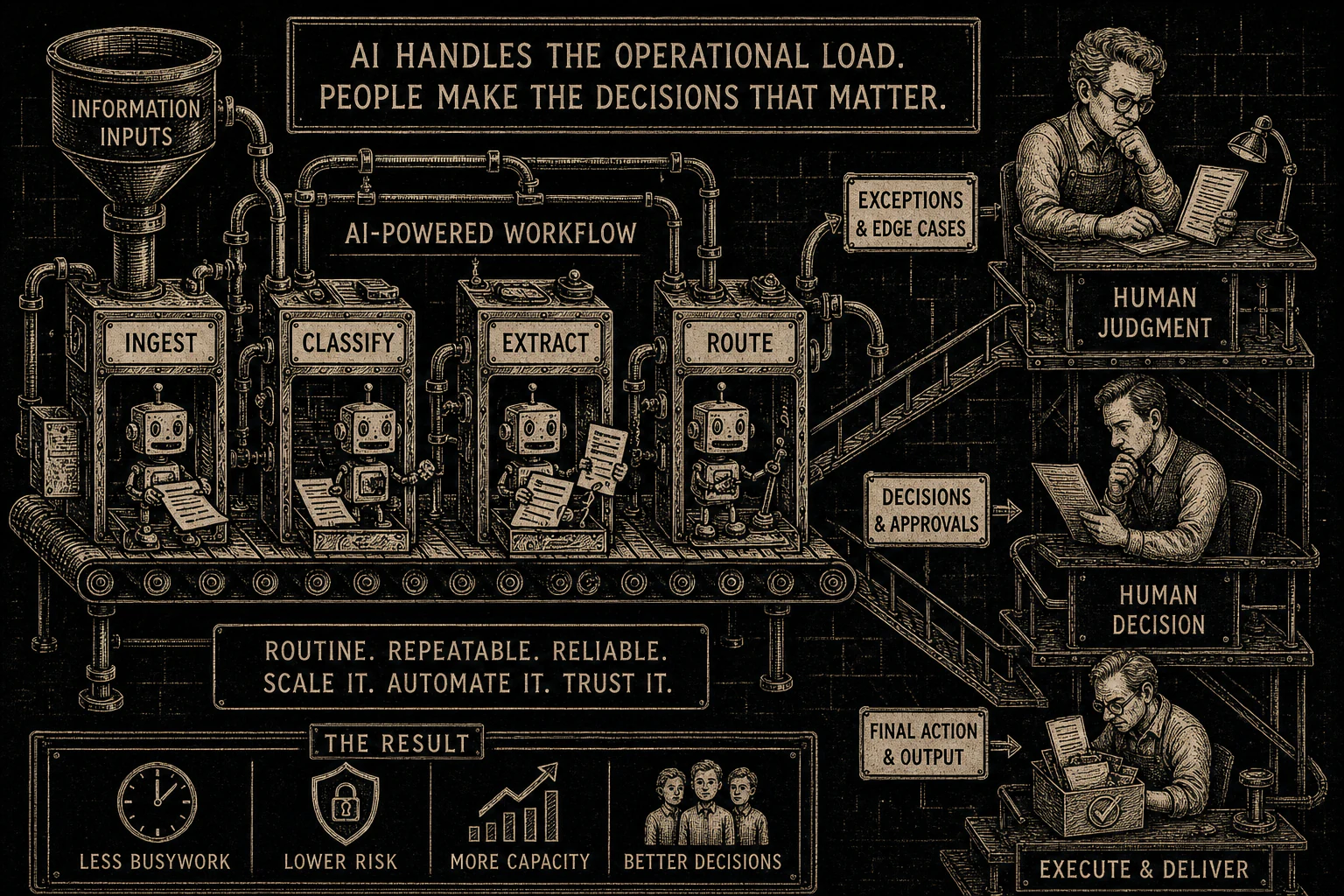
Some work follows exact rules. Some requires reading documents, understanding language, or adapting to changing circumstances. Some carries enough risk that a person must decide.
Good architecture separates these jobs. Software handles fixed rules. AI helps with information and context. People remain responsible for decisions with real consequences.
This gives the business more speed without pretending every decision should be automated.
What We Do
AI Architecture & Enablement
We begin with the work, not the tool. First, we find problems AI may help solve. Then we check whether your information, systems, and team are ready. We set boundaries and map the path from a small test to dependable daily use.
Behavioral Capability Bundles
A Capability Bundle gives AI what it needs to perform one kind of recurring work. That includes instructions, information, tools, permissions, steps, safety rules, and a clear response when something goes wrong. We fit each Bundle to your business and test it on real work before it is used more widely.
AI Work Systems
A Role System defines the work, tools, information, permissions, and limits of one position. A Department System connects several roles through shared information, handoffs, progress updates, and rules for when a person must step in. This makes responsibility visible, so work does not vanish between people, software, and AI.
AI Context & Continuity
We help AI carry the right decisions, sources, and unfinished work from one approved step to the next. The design also decides what should expire, who may use it, and what happens when the source changes or is deleted. This reduces repeated explanations without turning every conversation into permanent memory.
Architecturally Intelligent Business
We connect Capability Bundles, Role Systems, Department Systems, systems, information, and AI around the way the business actually works. Each layer remains clear enough to understand, govern, test, and improve. The business gains one working structure instead of disconnected tools that solve isolated problems.
Connections & Integrations
We connect AI to the systems where your work already lives. Existing permissions remain in force. The architecture controls what AI can reach, what it can read, and what it may update. That gives AI only the access required for the job.
Search, RAG & Hybrid Retrieval
RAG lets AI look up source material before it answers. We combine search by meaning, exact words, and direct system lookups. Permissions remain in force. The system shows where its information came from and favors current sources when the task requires them. When the evidence is weak, it asks for more information, stops, or hands the work to a person.
Workflow & Automation Architecture
We map each step from the first request to the final result. Then we decide what should happen automatically, where AI can help, and where a person must approve the work. We build the handoffs, approvals, and exception paths that keep unusual work from becoming lost work.
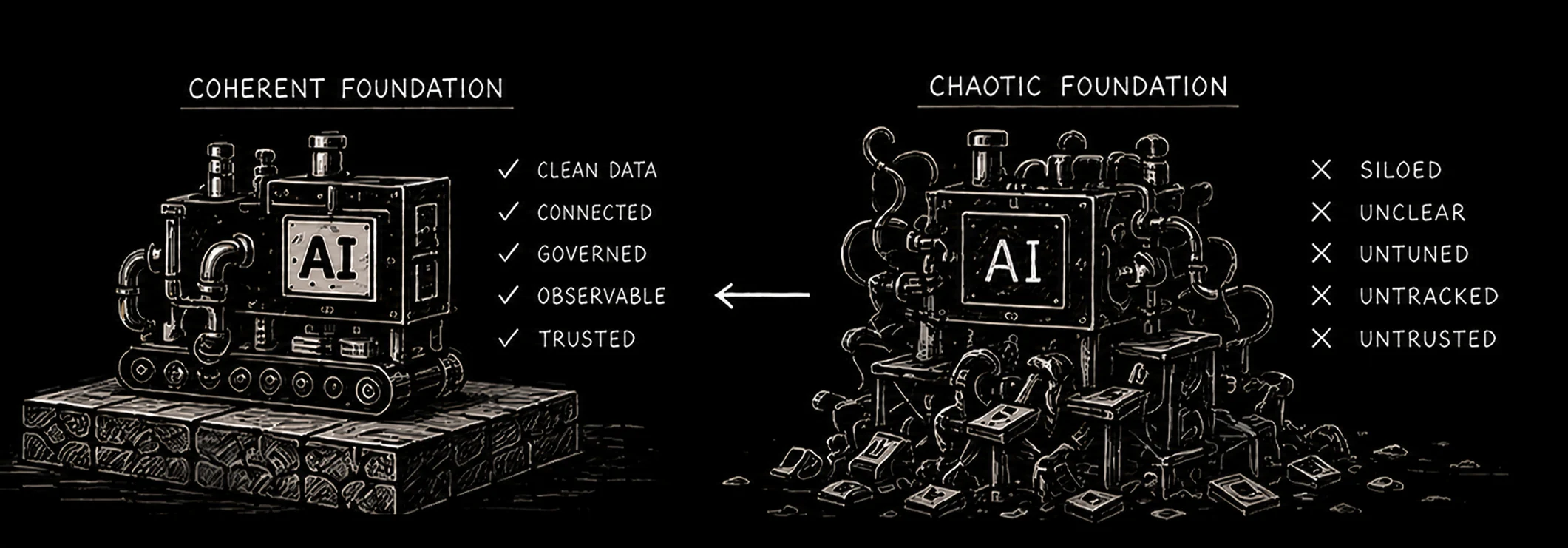
Reliable AI needs reliable information.
AI cannot make weak sources trustworthy.
If its sources are incomplete, outdated, scattered, or contradictory, the answer carries the same weakness. It may sound polished. That does not make it true.
We organize the information first. Then AI answers, automated workflows, and human decisions can be checked against sources people trust.
Give AI one useful job first.
Free scoping helps identify where AI may handle routine work for your team, where people must remain responsible, and what needs fixing before implementation makes sense.
Start with free scoping