Business meaning, metrics, and reporting
Define the terminology, calculations, reports, ownership, and approved meanings the organization relies on.
Explore this capability
Cross-Practice Architecture
Nornoet defines, connects, and improves the business language, data, documents, systems, reports, workflows, permissions, and retrieval methods that shape how an organization operates. Begin with one component or architect the complete environment.
Start with free scoping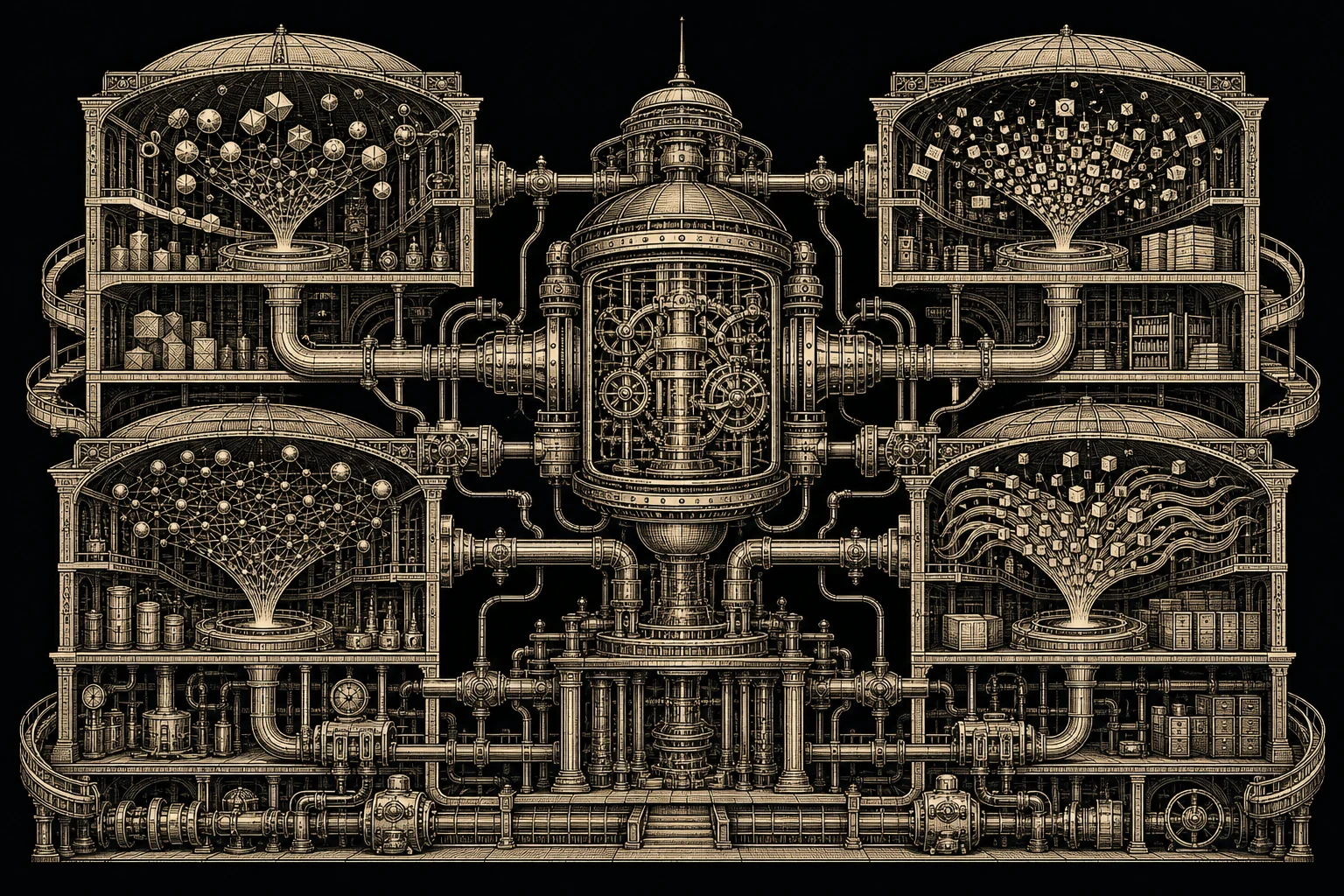
One Connected System
A client may need a new folder hierarchy, an ERD, a report catalog, a business glossary, a repository migration, or a RAG system. Each engagement is independently useful and designed so it can become part of a larger architecture later.
Data architecture, information architecture, workflow architecture, and AI architecture are different views of the same organizational information system.
Modular Offerings
The modules share definitions, design conventions, ownership, and governance so that individual improvements do not become disconnected one-off solutions.
Define the terminology, calculations, reports, ownership, and approved meanings the organization relies on.
Explore this capabilityMap business entities, relationships, schemas, lineage, sources of record, and cross-system dependencies.
Explore this capabilityDesign document types, repository responsibilities, folder structures, workspaces, versions, and lifecycle controls.
Explore this capabilityAdd the structured context that makes information consistently classifiable, searchable, governable, and reusable.
Explore this capabilityBlend semantic retrieval, keyword search, structured queries, deterministic rules, permissions, ranking, and validation.
Explore this capabilityBuild the flows that create, classify, move, review, approve, update, retrieve, and archive information.
Explore this capabilityThe Architecture Sequence
Terms, entities, metrics, documents, reports, ownership, and intent.
Data models, repositories, hierarchies, metadata, relationships, and sources.
Search, permissions, deterministic queries, semantic indexes, ranking, and validation.
Routing, workflows, Capability Bundles, Role Systems, human judgment, and escalation.
How We Work
Interview stakeholders and map the current systems, repositories, terminology, reports, data models, documents, permissions, and real operating practices.
Define the target entities, meanings, structures, sources, hierarchies, metadata, retrieval methods, routing rules, governance, and AI requirements.
Restructure, migrate, integrate, index, automate, validate, document, train, and optimize the architecture inside the client environment.
Client-Controlled Architecture
Production data, document indexes, vector databases, retrieval services, connectors, permissions, and AI workflows are designed around the client's systems and security boundaries. The goal is durable capability the client controls, not dependency on a hidden external environment.
Free scoping