
AI / Work Systems

Build AI around the work. Do not rebuild the work around AI.

AI usually enters a business one task at a time. That can help. But the work around that task still depends on people knowing who owns it, where the information lives, and what happens next.

An AI Work System gives that work a structure. A Role System organizes one position. A Department System connects several roles.

People keep the judgment. AI and software help the work move.

Start with free scoping
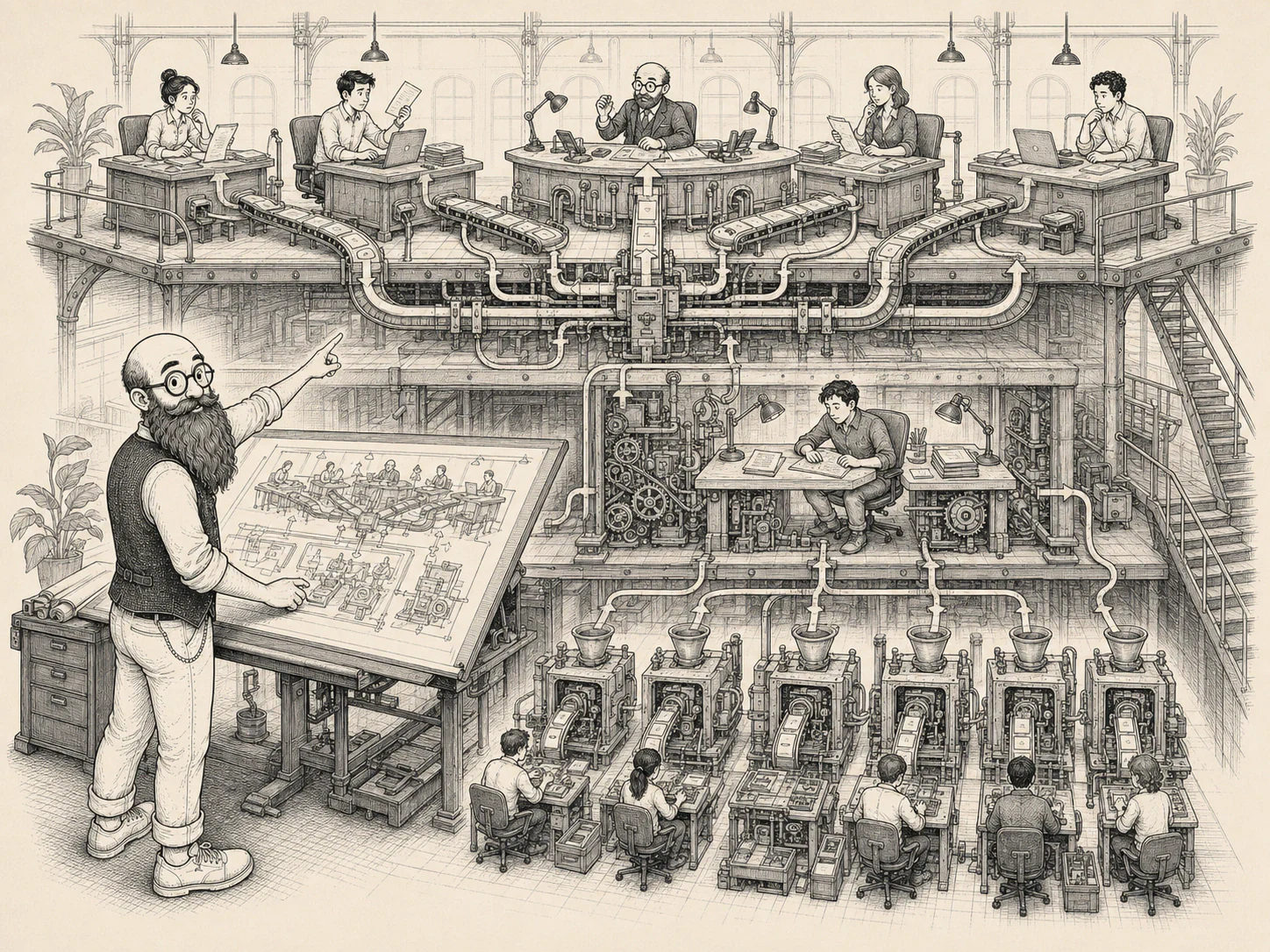
The Nornoet architect connecting AI capabilities to individual roles and a coordinated department.
01

Foundation

One Capability Bundle. One kind of work.

A Capability Bundle gives AI the instructions, information, tools, permissions, and safety rules needed for one workflow.

The design also sets its limits. When work falls outside them, the capability can stop, ask for more information, or hand the decision to a person.

Explore Capability Bundles
One workflow
02

Role System

A Role System brings one position’s work together.

One position may handle dozens of recurring tasks across several systems. The Role System gathers that work into one clear structure.

It defines what the position owns, what information it can use, which systems it may reach, and when a person must decide.

  • Responsibilities and recurring work
  • Steps, required information, and expected results
  • Systems, connections, knowledge, and permissions
  • Limits, exceptions, handoffs, and escalation rules
  • Requests matched to the right capability
  • Three Capability Bundles fitted to the role
03

Department System

A Department System helps several roles work as one team.

Roles do not work alone. They share information, pass work, report progress, and deal with problems that cross job titles.

A Department System defines how those parts fit together. Each role keeps clear responsibilities. The department gains coordination without becoming one giant AI system that nobody can explain or control.

  • Shared standards and trusted information
  • Clear ownership and outcomes for each role
  • Handoffs, progress updates, exceptions, and escalation
  • Useful views for employees and leaders
  • At least one capability that coordinates work across the department

Meaning-Based Routing

Your team should not need magic words.

People ask for the same work in different ways.

Meaning-based routing uses what a request means, not only its exact wording. It sends the request to the right capability.

When judgment is required, a person remains responsible.

Primary Outcome

Help the same team handle more work without losing control.

Teams lose time chasing updates, repeating instructions, searching for knowledge, and carrying work between systems. Clear roles and handoffs reduce that drag.

That can help the existing team handle more work without requiring headcount to rise at the same rate. It also makes work easier to track and important knowledge less likely to vanish when someone is away or leaves.

Leaders get a clearer view of what is moving and what is stuck. The system may support staffing decisions. It does not make them, and it does not remove people from decisions that require judgment.

Modular Expansion

Build only as far as the work requires.

Start with one workflow, one role, or one department. Each layer can support the next, so the work you build now can remain useful as the system grows.

  1. 01Capability Bundle

    One reliable piece of work

  2. 02Role System

    Several capabilities working together for one role

  3. 03Department System

    Several roles working together across one department

  4. 04Architecturally Intelligent Business

    Departments sharing information and coordinating their work

See how the whole business connects

Free scoping

Start with the role or department where work keeps getting stuck.

Start with free scoping