Semantic retrieval
Embeddings and vector search locate conceptually related passages even when the wording differs.

AI / Search, RAG & Hybrid Retrieval
Nornoet designs retrieval systems that combine RAG, semantic search, vector databases, keyword search, structured queries, metadata, permissions, deterministic rules, citations, and human escalation.
Start with free scoping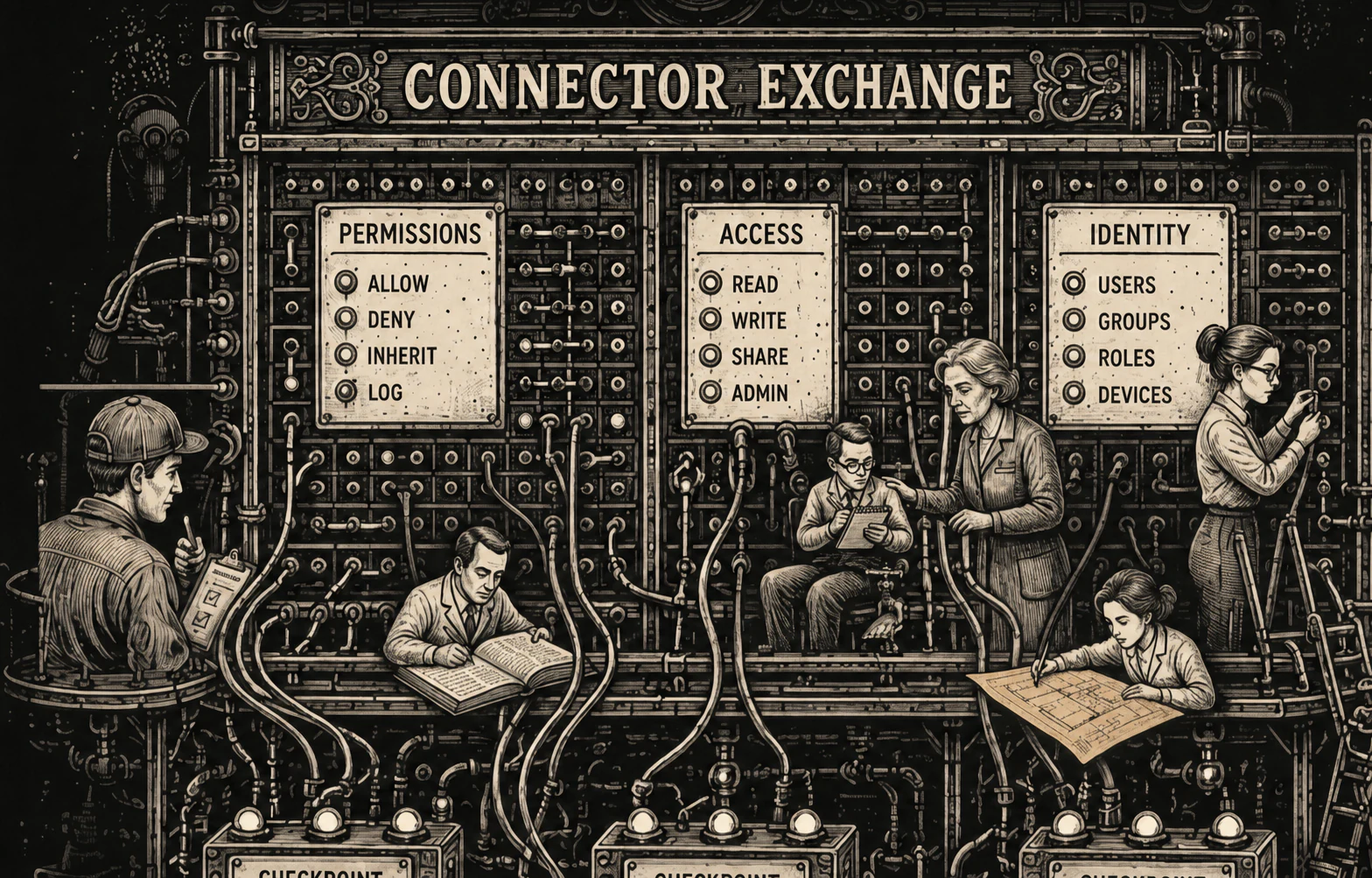
Hybrid by Design
Documents often benefit from semantic and keyword retrieval. Structured facts may require SQL, APIs, or deterministic query layers. Metadata and permissions constrain both. The best system blends the methods instead of forcing every question through one fashionable component.
Retrieval Architecture
Embeddings and vector search locate conceptually related passages even when the wording differs.
Exact terms, names, clauses, identifiers, and phrases remain available when precision matters.
SQL, APIs, reporting models, and deterministic query layers retrieve facts from tables and operational systems.
Document types, entities, dates, statuses, folders, sources, and lifecycle state narrow the search correctly.
The retrieval layer preserves the access boundaries and source permissions the organization already relies on.
Reranking, source authority, version rules, citations, confidence requirements, and escalation reduce plausible but unsupported answers.
Retrieval Flow
Identify the user intent, relevant business entities, requested information type, and ambiguity that must be resolved.
Apply identity, permissions, authoritative sources, repositories, document types, metadata, dates, and version rules.
Use deterministic queries for structured facts and semantic, keyword, or repository-native search for documents and knowledge.
Combine eligible results, compare authority and relevance, and select the evidence appropriate to the request.
Check sources, versions, calculations, contradictions, completeness, and the evidence supporting the response.
Return a supported result, ask for missing context, or stop when the architecture cannot establish a trustworthy answer.
RAG and Vector Databases
Nornoet can build ingestion pipelines, document parsing, OCR, chunking, embeddings, vector indexes, hybrid search, reranking, incremental updates, deletion propagation, and retrieval evaluation. We use them when they improve the system, not because every repository needs a vector database attached to it.
Operational Accuracy
When a document is restricted, superseded, moved, or deleted, the retrieval architecture must update with it. Production-ready retrieval includes permission synchronization, version control, source provenance, citations, monitoring, and tests built from real organizational questions.
Free scoping