

AI / Workflow & Automation Architecture
Build workflows that can stop, recover, and continue.
Move routine work from request to result. Let software handle clear rules, let AI help when the answer is less obvious, and keep people in charge of decisions that matter.
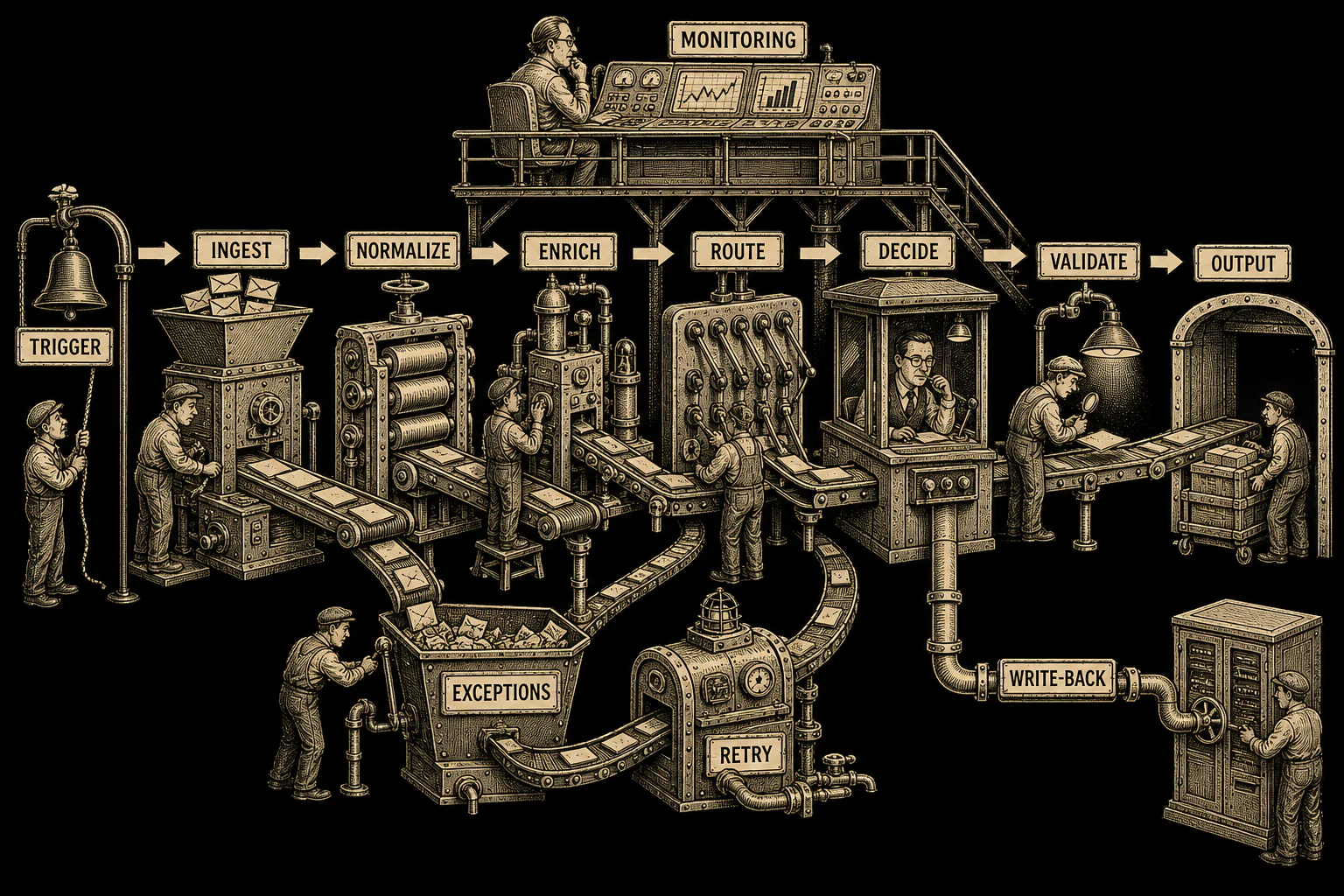
Map the work from beginning to end.
We begin with the work as it actually happens.
We trace what starts it, what information it needs, who handles it, which systems it enters, and what counts as finished.
We also map delays, exceptions, and steps that exist only in someone's memory. A workflow that works only when everything goes right does not work yet.
Choose what software, AI, and people should each do.
Some steps follow fixed rules. Software can handle them quickly and consistently.
Other steps involve language, patterns, or missing context. AI can help prepare or check that work, but help is not authority.
People remain responsible when judgment, approval, money, access, or other real consequences are involved.
We turn those choices into a clear plan for filing, labeling, searching, reviewing, approving, updating records, and archiving information.
Plan for failure before it arrives.
Systems go down. Information arrives late. A request may be incomplete, unauthorized, unusual, or sent twice. The workflow needs a safe response for each one.
Checkpoints record work that is already finished. If something fails, the process can pause and continue from the last safe point instead of starting over.
Each step also recognizes work it has already completed. A retry should not send the same message twice, create another copy of the same record, or repeat a payment.
Missing information, weak evidence, permission problems, and high-risk exceptions stop the process or send the work to the right person.
Leave with a workflow your team can run.
You receive the redesigned workflow and a clear map of every step.
It shows what starts the work, what information it needs, who owns each part, what happens automatically, where AI may help, and when a person must approve the result.
It also defines system connections, checkpoints, retry rules, exception paths, permission controls, useful records, and what your team must maintain.
Keep work moving without hiding what happened.
Routine work moves with less friction. People spend more time on decisions that require judgment and less time carrying information between systems.
Your team can see what ran, what failed, what resumed, and who approved important actions.
Automation should remove needless work. It should not remove responsibility.