

Data / Architecture Design
Architecture
Design.
Before data can be useful, it needs a clear structure. We design how yours is stored, connected, owned, and used.
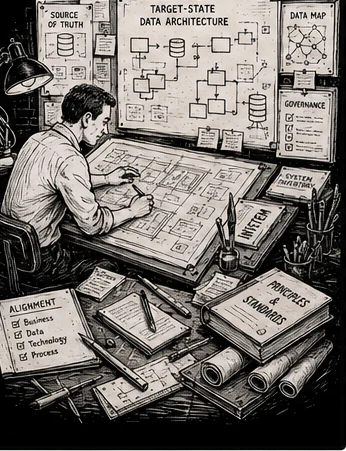
What We Do
We identify what your organization needs to track, how those things connect, and where each piece of data comes from.
We also show who owns the data and which reports depend on it. The result is one clear plan for people, systems, and AI.
Assessment
We begin by learning how your business works and examining every place important data is stored. We review tables, fields, reports, system connections, ownership, and known quality problems.
Then we trace where important data begins and how it moves. This reveals conflicting definitions, unclear ownership, and systems that cannot share data reliably.
Approach
We design the architecture at three levels. The conceptual model shows what the business needs to track. The logical model shows how those things connect. The physical model shows exactly how and where the data will be stored.
We also identify the trusted system for each kind of data, record how data moves between systems, and explain the major design decisions.
The design should fit the business. The business should not be forced to fit the software.
Together, these documents give your teams a clear guide for building and managing data for reporting, automation, and AI.
Deliverables
You receive a review of your current data and systems, three levels of data models, and diagrams showing how different records relate.
You also receive the proposed final design, maps showing where data moves and who owns it, rules for managing the data, and a written record of the major decisions.
Outcomes
Your organization gains one clear plan for its data.
Reports become more reliable. Systems become easier to connect. Automation becomes safer. AI is less likely to use the wrong facts.