

How AI Can Give Jerry His Time Back
Building AI workflows around the people who already know the business
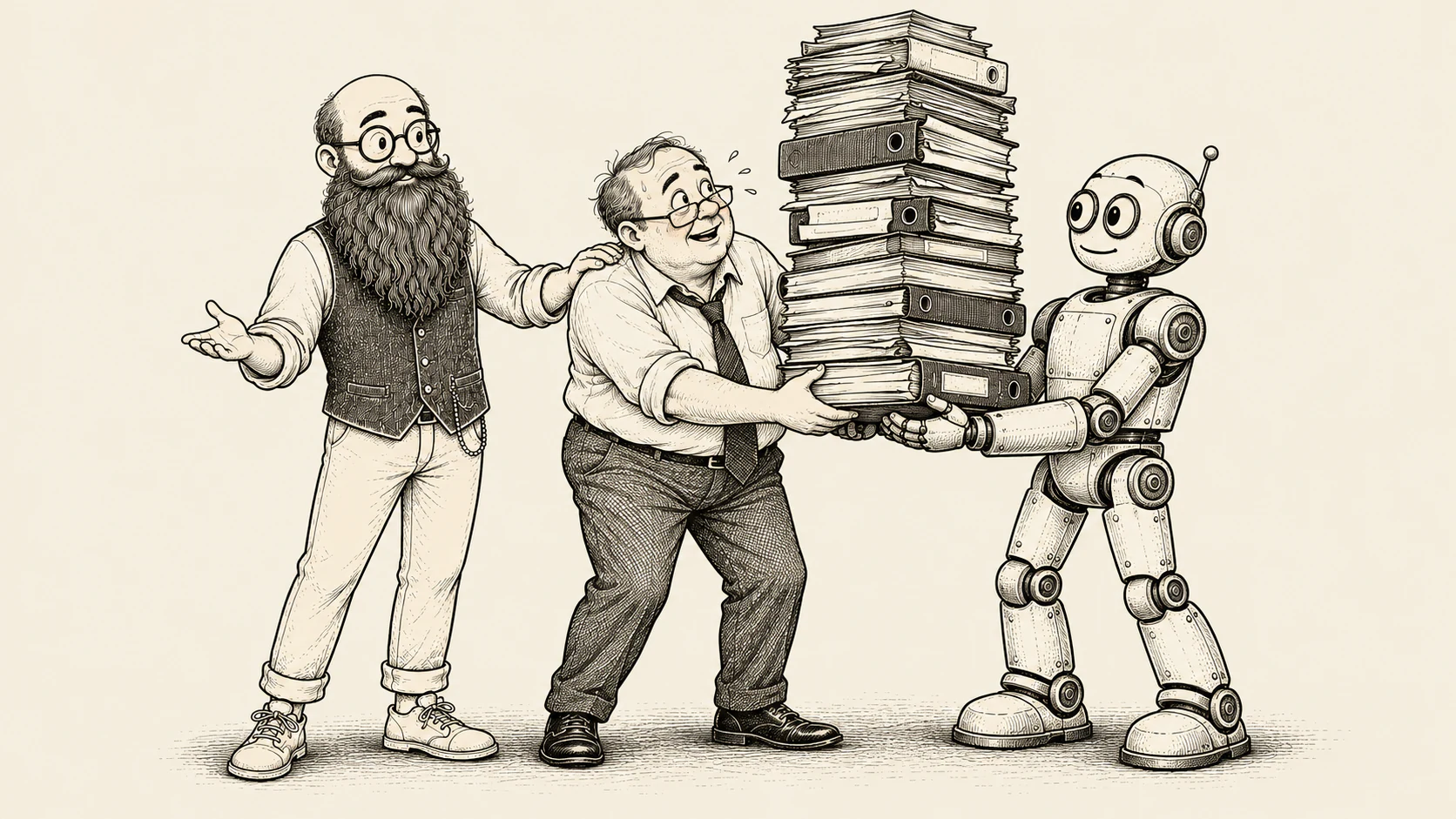
Somewhere in your company, there is probably a Jerry.
Jerry knows which report to run and what the fields actually mean. He knows why accounting’s numbers differ from operations’ numbers, and which file holds the approved figures.
He also knows that the file labeled “Final” was replaced three weeks ago by a file with a considerably less reassuring name.
When somebody gets stuck, the answer is familiar.
“Ask Jerry.”
You may have a Jerry in each department. People go to them because the files alone do not explain how the business works.
But every question takes time. Jerry explains the same terms, finds the same documents, and checks the same exceptions. Meanwhile, his own work waits.
That repeated demand on one person is a problem worth solving with AI.
The goal is to give people a reliable first stop for the questions Jerry has already answered. Build the AI to use his approved guidance and bring unresolved cases back to him.
Jerry has a fair question: “Are you writing down everything I know so you can get rid of me?”
Writing down rules does not make judgment calls disappear. The business still needs someone who understands why the rules exist, handles new cases, and keeps the guidance current. That gives Jerry an ongoing role in deciding what the AI handles and approving changes.
Management needs to be honest about that role and give him time to do it. A plan to replace Jerry should not be presented as a plan to support him.
Done honestly, Jerry gets time to focus on his own work instead of constantly advising on everyone else’s.
Take a report that people say AI cannot produce because “you have to know the business.”
They have a point. A report can look perfect and still use the wrong definition, the wrong records, or the wrong version of a document. Better formatting will not fix that.
Sit with Jerry while he works through one report. Ask him to explain the decisions he makes along the way.
Suppose someone asks for a list of “active clients.” Accounting uses that term for clients who owe money. Operations uses it for clients with work underway.
Jerry knows to ask who needs the report and what they want to find out. That tells him which definition to use.
Next, he finds two documents with the same name. He checks the client and matter numbers to see which one belongs to this job.
Then he finds two versions of the right document. One is newer, but it is a draft. He checks the approval record before choosing which version to use.
There is a process behind those decisions.
Write down what he checks, where he looks, and when he asks for help. Start with repeated decisions he can explain. Keep him involved wherever the rules do not settle the case.
Each repeatable part can become an AI skill: a written procedure for one part of the work. It tells the system what to check, which sources to use, and which cases need Jerry’s judgment.
One skill captures how Jerry chooses the right definition. Another captures how he matches a document to a matter. A third captures how he checks whether a version is approved.
These are small pieces of Jerry’s working method. Together, they support the report. You do not have to force every rule into one giant prompt and hope the system sorts it out.
Build the workflow to use those skills in order and record the sources and checks used. That gives Jerry a way to trace mistakes back to the steps that produced them.
Those skills can support other reports, too. Once you have captured and tested how Jerry finds an approved document, you have a procedure to reuse wherever that same rule applies.
Test the process with Jerry. Use ordinary cases and messy ones. Give it missing information, conflicting documents, and numbers that do not add up.
Set clear rules for stopping and asking for review. Then check that the system follows them. A missing approval, for example, should hold up the report.
When the AI needs Jerry, it should bring him the question, the relevant documents, and the specific decision needed. Group related questions where practical. The point is to reduce interruptions.
After Jerry answers, ask whether his answer applies only to this case or should become a standing rule. If he approves a new rule, save it where the system will use it. Assign someone to keep it current. An answer in a chat does not become company policy on its own.
Each department’s experts keep that authority in their own area. If two departments disagree about what a shared report should mean, the people responsible must settle it. AI can show them the conflict. It should not choose the policy.
Start with one recurring report. Check its accuracy and count the time spent answering questions, reviewing results, and maintaining the instructions. The test is whether coworkers get dependable answers and Jerry gains time overall.
When the AI reaches the edge of what the company has taught it, the next step should still be familiar.
Ask Jerry.