

The Report Is Finished. Why Are We Still Rebuilding the Work?
Reusable AI skills and shared project context help teams continue reporting work, tailor reports to each reader, and trace decisions back to their sources.
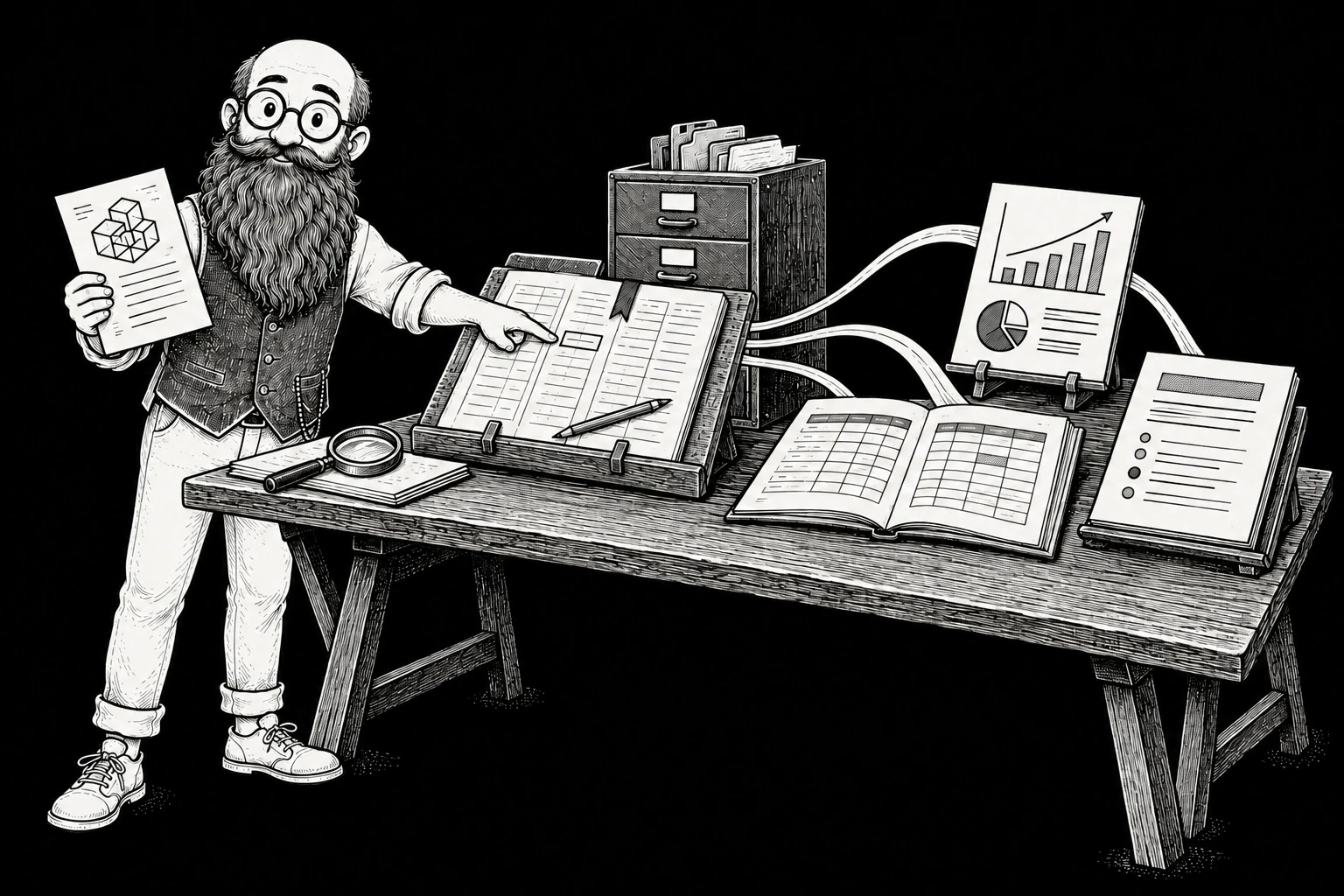
A monthly report reaches the leadership team. The numbers are clear. The charts look good. Then someone asks why a cost was excluded, which forecast was used, or whether the figures were checked against last month's results.
The answer is somewhere. Part of it is in a spreadsheet. Another part is in a conversation. The person who knows the rest is in a meeting.
The report was delivered. Understanding it still requires a small search party.
AI can help prepare reports, check calculations, and explain changes. But when the work stays scattered across individual conversations and files, the next person may have to rebuild the context before doing anything useful. Faster report generation leaves that problem largely intact.
At Nornoet, our approach brings reusable skills together with shared project context. The aim is to preserve enough of the work for another authorized person to continue it, examine it, and use it for a different purpose.
Teaching the process
A skill gives an AI assistant a defined way to carry out a task. For financial reporting, that might include which source files to read, how to calculate a variance, what to check, and how to present unresolved questions.
It can also specify the format different readers need. A finance lead may want the detailed workbook. A department manager may need spending against budget. An owner may want a short explanation of cash position, profitability, and decisions requiring attention.
The underlying figures and definitions should remain consistent. The amount of detail, language, and presentation can change with the reader.
Claude supports skills within its Excel and other Microsoft 365 add-ins. OpenAI documents ChatGPT desktop workflows that combine spreadsheet checks, source files, and leadership reporting. These capabilities provide useful building blocks, although setup and access differ between products. 1 · 2
The organization still has to define its process, connect the right sources, and decide what requires human review. Unattended reporting also requires a configured schedule or trigger and access to the necessary files and tools. 3
Keeping the work available
Consider an analyst preparing a monthly financial report. They reconcile two accounts, identify a discrepancy in a third, and record why a particular forecast was used. Before finishing, they need to move to another task.
In the shared-context workflow, a curator routes the relevant conversation outputs and documents to the appropriate client, team, or department record. The curator is the part of the process responsible for organizing what should be retained and where it belongs.
That record needs more than the latest spreadsheet. It should preserve the sources and versions used, decisions made, completed checks, unresolved issues, and current status. Draft findings must remain distinguishable from approved results.
The next authorized colleague can then open the project and establish where the work stands. They can see the discrepancy that needs attention and the checks already completed, rather than starting the whole exercise again.
An explicitly shared project is one route to that context. Someone can also connect to the same underlying project record when their existing permissions allow it. The connection must check those permissions; knowing a project exists does not grant access to its contents.
Relevant work can therefore be shared without exposing everyone's private conversations. Any retained extracts and summaries need the same care over access as the documents they describe.
Knowing when to reuse work
Shared context helps a team discover work it has already done. Reusing it responsibly requires checking whether it still applies.
A report completed for September does not settle October. A calculation may need to be rerun because a source changed. Two people may also begin the same task before either saves a result.
The project therefore needs to record the reporting period, source versions, who owns the task, and whether it is in progress, ready for review, or approved. Preventing simultaneous duplicate runs requires coordination over who starts the task as well as a record of what finished.
This gives the team a basis for deciding what to reuse, what to refresh, and what still needs checking. Interrupted work needs to be marked as incomplete so a partial result cannot pass for a finished report.
Asking why
Once the report reaches an executive, shared context can support a more useful conversation about it.
Why did this number change? Why was that source used? What was excluded? Which checks were completed?
The assistant can look for answers in the recorded sources, decisions, and work history available to that executive. An explanation should point back to those records. If the reason for a decision was never captured, the answer should identify the gap and leave it for someone to resolve.
This is also a better way to understand the work behind a report. Completed checks, revisions, and documented decisions provide evidence of what was done. They do not, by themselves, measure someone's effort or tell us how many hours they worked.
Connecting the sources
A unified source of truth does not require every piece of information to live in one database.
The accounting system may remain authoritative for posted transactions. A document repository may hold approved reports. The project record may preserve reporting decisions and outstanding questions. Shared context connects these sources and makes their relationship usable.
That connection needs to preserve where information came from, the period it covers, when it was last checked, and whether it was verified. A saved assumption remains an assumption. When records disagree, the discrepancy should be visible until someone resolves it.
When someone asks why a number changed, the organization should be able to find the evidence and the recorded decision, even while the person who prepared the report is in another meeting.