Business
The organization-wide operating architecture.

Artificially Architected Business
An Artificially Architected Business connects departments, roles, workflows, systems, knowledge, data, and AI into one coherent operating architecture.
Not one giant agent. Not one monolithic automation. A modular operating system composed from smaller governed capabilities that remain understandable, testable, and expandable.
The Architecture
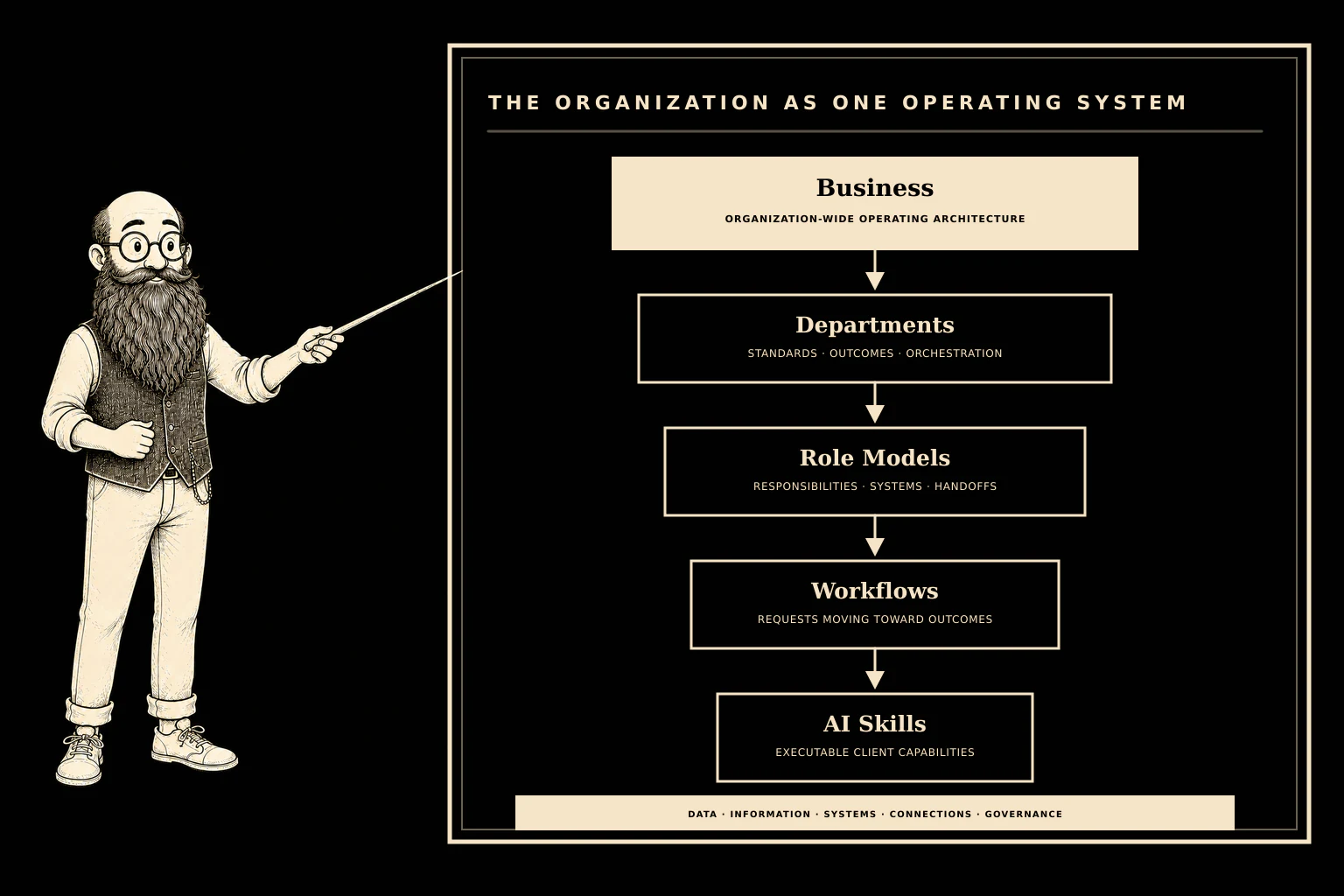
The organization-wide operating architecture.
Shared standards, knowledge, outcomes, orchestration, and coordination across roles.
Canonical operating models for positions, including responsibilities, workflows, boundaries, knowledge, systems, handoffs, and Skills.
The repeatable sequences through which work moves from request to outcome.
Executable client-specific capabilities that perform defined parts of the work.
Data · Information · Systems · Connections · Governance
Information Moves in Every Direction
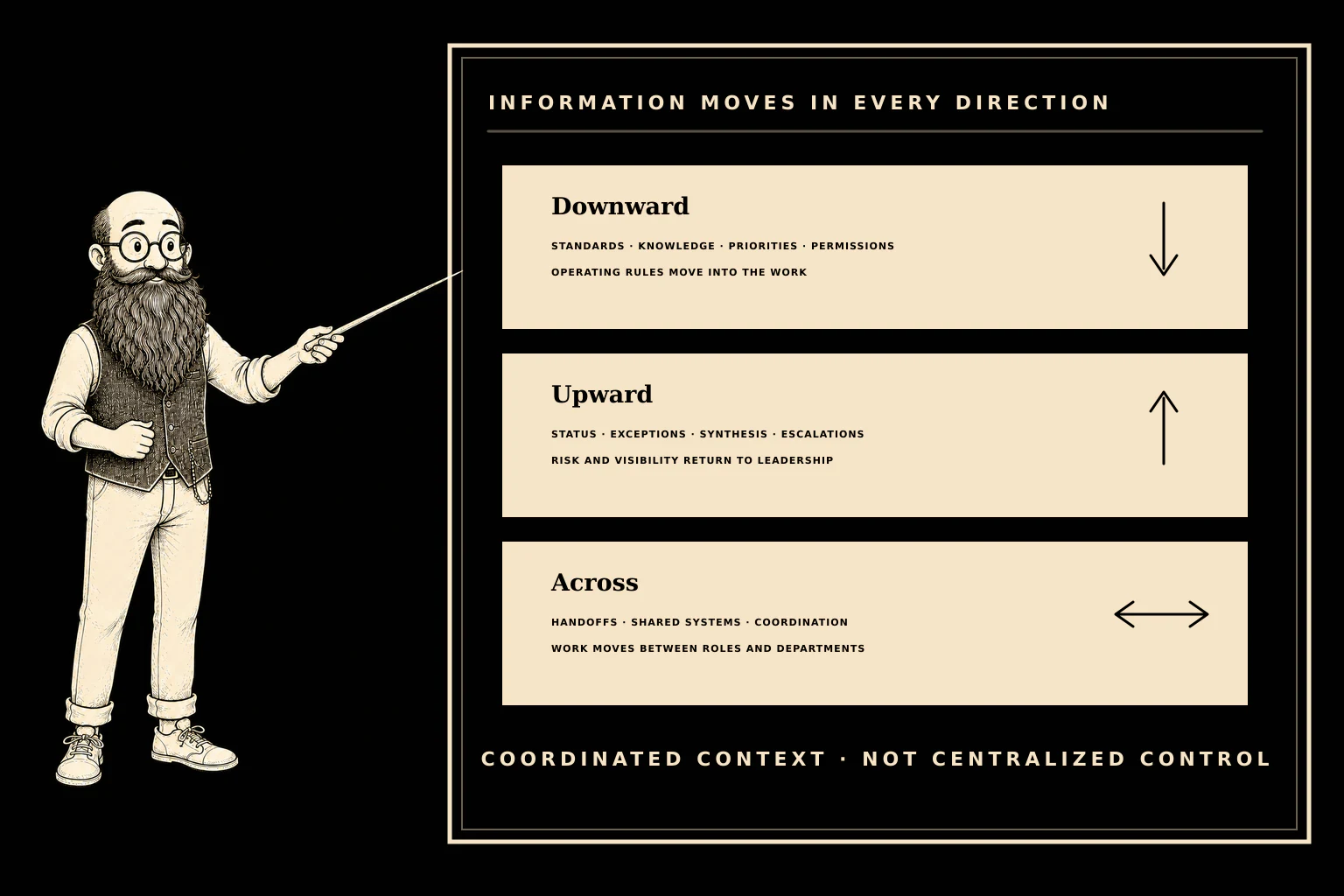
The objective is not to centralize every action. It is to make the movement of work and information coherent enough that each part of the organization can operate with the right context, boundaries, and visibility.
Start Anywhere Useful
A client might begin with:
Each component can solve an immediate problem and later become part of the broader operating model. Nothing requires the organization to commit to the entire architecture at the beginning.
Phased Implementation
Build the highest-value workflow capabilities and address the data, information, connector, permission, or governance gaps required to support them.
Compose Skills around high-value positions and establish the canonical operating specification for how those roles work.
Connect Role Models through shared knowledge, routing, handoffs, orchestration, status synthesis, exception handling, and leadership interaction.
Connect departments into the broader business operating layer, including cross-department dependencies, standards, status, escalation, governance, and shared systems.
The phases are illustrative, not mandatory. Sequencing follows the client's priorities, readiness, and operating reality.
Architecture Roadmap
Large or complex transformations normally require a paid architecture roadmap after the free assessment.
The roadmap may include:
The roadmap is a useful architecture deliverable whether the client implements the full vision, proceeds incrementally, or uses the plan to guide other internal decisions.
Pricing
Scoped
The architecture is scoped from the Department Models, Role Models, Skills, Data Architecture, Information Architecture, connections, integrations, governance, and rollout work the organization actually requires.
Nornoet does not publish an artificial package price for a transformation whose size depends on the organization being transformed. Engagements are phased and quoted as defined fixed-fee work.
Client Control
Where technically appropriate, source knowledge remains in client-controlled systems and the client retains ownership of its operating material. The broader design inherits the runtime boundary defined across Nornoet's AI practice: client-specific operation uses client-controlled AI and approved client systems, not Nornoet's internal AI.
The free assessment identifies where useful progress can begin. For larger transformations, a paid roadmap turns the broader vision into a realistic sequence of roles, departments, dependencies, and implementation phases.