

Most AI Failures Aren’t AI Failures
Many problems blamed on AI begin somewhere else. Bad data, confusing workflows, and overwhelmed people may be the real cause.
A pattern keeps repeating across legal tech, healthcare, and enterprise platforms:
Most AI failures are not AI failures. They are data and adoption failures that surface late and get blamed on the model.
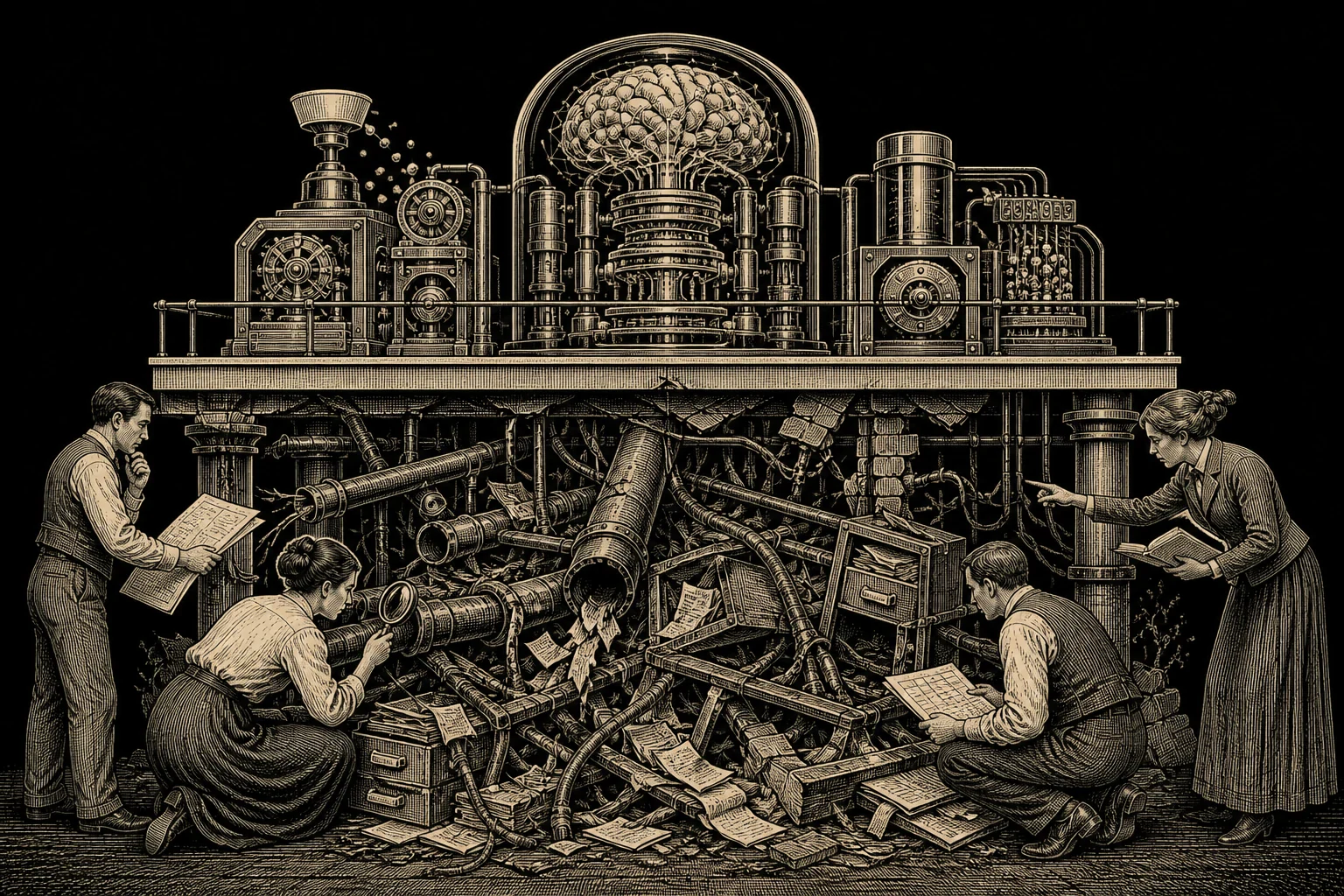
Many platform implementations fail for the same reason. They are built upside down. Tools and features first. End users and data last. There is no relational model underneath that reflects how information actually connects or how people actually work.
On top of that, teams treat AI like it’s one thing. ChatGPT everywhere. In reality, each AI tool has different constraints and failure modes. Without deliberate prompt design, API orchestration, and translation layers, you are not adding intelligence. You are accelerating entropy.
The bottleneck is often foundational: poorly structured data and workflows that demand too much human input for too little output. High cognitive load suppresses adoption. Low adoption starves analytics of representative behavior. Weak analytics make AI harder to trust. The platform takes the blame for a chain of problems that began underneath it.
Good data architecture looks less like configuration and more like organizational diagnosis. You examine how the organization actually works, where friction lives, and what people need to do their jobs. Then you build upward, connecting systems and users through a coherent relational structure.
From there, the rest is boring. Structure the data first. Minimize required input. Derive everything else.
When users get more value with less effort, behavior changes. AI removes tedious work. Humans keep judgment and strategy.
Garbage in still means garbage out. But good foundations quietly change everything.
If AI is not sticking in your organization, it’s worth asking whether the problem is the model or the way the system was built.